
Genomics
Digital experiences that make advanced sequencing, genetic testing, molecular technologies, and scientific capabilities understandable without oversimplifying the science.
Web design, UX, SEO, content architecture, and digital strategy for genomics, clinical laboratories, precision medicine, life sciences, and scientific technology companies.

Biotech websites have a difficult job. The science may be sophisticated, highly technical, and genuinely differentiated, but the website still has to help someone understand what the company does, why it matters, and what they should do next. Scientific accuracy cannot come at the expense of clarity, and clarity cannot come at the expense of credibility.
That challenge becomes harder when the audiences are different. A physician may need clinical utility and ordering information. A researcher may care about methodology, instrumentation, sample requirements, and data. A patient may simply be trying to understand what a test means. An investor or commercial partner may be evaluating the platform, market opportunity, leadership, and evidence behind the company. Putting all of that information into one undifferentiated website usually creates more complexity rather than less.
Scientific companies also tend to organize themselves around internal capabilities: technologies, departments, assays, platforms, and technical terminology. Customers do not always think that way. They may enter through a disease area, research objective, testing need, workflow problem, or specific service. Strong information architecture has to connect the scientific model of the business with the way each audience actually looks for answers.
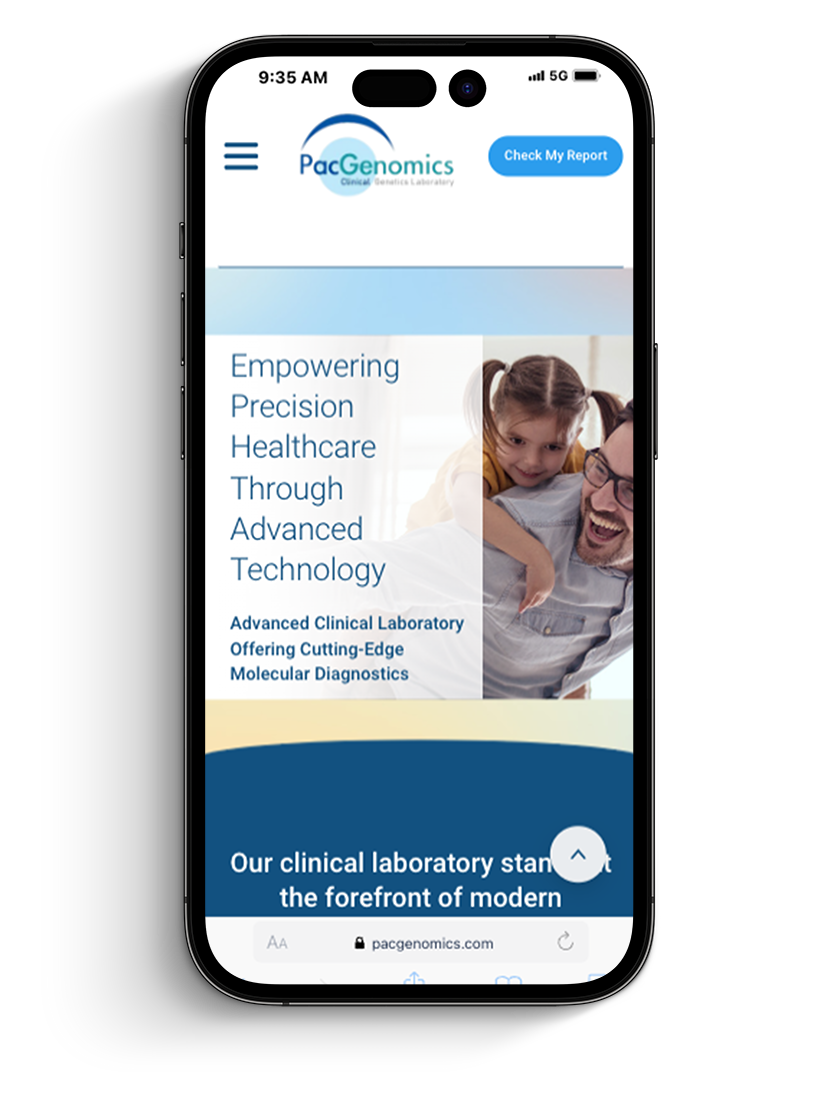
PacGenomics needed a digital experience that could communicate advanced clinical genetics and molecular diagnostic capabilities with the scientific credibility technical audiences expect while making a broad range of services easier to understand and navigate.
Digital experiences that make advanced sequencing, genetic testing, molecular technologies, and scientific capabilities understandable without oversimplifying the science.
Websites for accredited and specialized laboratories where physicians, researchers, patients, and partners need different levels of information, credibility, and access.
Digital strategy and UX for companies translating complex biological data and technologies into more targeted diagnostics, treatments, and clinical decisions.
Websites that communicate scientific capabilities, research expertise, platforms, services, and partnerships to technical audiences without turning the experience into a research paper.
We learn the business, audience, competitive context, and the decisions customers need to make.
We shape positioning, content hierarchy, conversion paths, and a visual system built for the market.
We develop the experience, connect the required systems, and build search and measurement into the foundation.
We launch, measure performance, improve conversion paths, and expand visibility as the business evolves.
Full site migration and rebrand shipped in 8 weeks
View project
Premium charter positioning, a conversion-focused rebuild, and a custom quote experience.
View project
A clearer specialty-catalog experience designed around high-intent buyers.
View projectBiotech companies often have to communicate complex science to several audiences at once. Researchers, clinicians, patients, investors, commercial partners, and prospective employees may all arrive with different levels of technical knowledge and different goals. The information architecture, content hierarchy, UX, and visual system need to preserve scientific credibility while giving each audience a clear path through the site.
We separate complexity from clarity. The science can remain detailed and precise, but not every visitor needs every detail at the same moment. We organize content in layers: a clear explanation of the capability or value first, supporting context next, and deeper technical information where researchers, clinicians, or other expert audiences need it.
Yes. Subject-matter experts are often essential to the process. We use their expertise to understand the science, terminology, differentiation, evidence, and required nuance, then translate that knowledge into information architecture and digital content that works for the intended audience. The goal is not to replace scientific expertise with marketing language.
Yes. A redesign can begin with the existing content and determine what should be retained, reorganized, rewritten, expanded, consolidated, or retired. Often the biggest improvement comes from creating a better hierarchy around existing information rather than rewriting every technical page from scratch.
Yes. Search strategy can include service pages, technology and platform pages, applications, disease or research areas, technical resources, scientific terminology, internal linking, schema, and technical SEO. We focus on the specific language clinicians, researchers, partners, and other qualified audiences use rather than chasing broad traffic that has little connection to the business.
AI systems need to understand the relationship between the company, its scientists, services, technologies, applications, evidence, and areas of expertise. Clear information architecture, explicit entity relationships, useful technical content, structured data, authoritative references, and direct answers to important questions can make that information easier for AI-powered search systems to interpret and surface.
Clear strategy, credible design, and a connected digital system built around how your customers decide.